Summer may be over but ice-cream never goes out of season!! If you are heading to Girona, Spain, then a must stop is Rocambolesc, the Willy-Wonka-esque ice cream shop of the Michelin 3 star Roca Brothers, in particular Jordi Roca. The sweet brother in charge of desserts at El Celler de Can Roca, current World’s Number 1 restaurant, invites you to experience the sweet sensations of El Celler de Can Roca at Rocambalesc – a world much more than just ice-cream!

Rocambolesc Girona

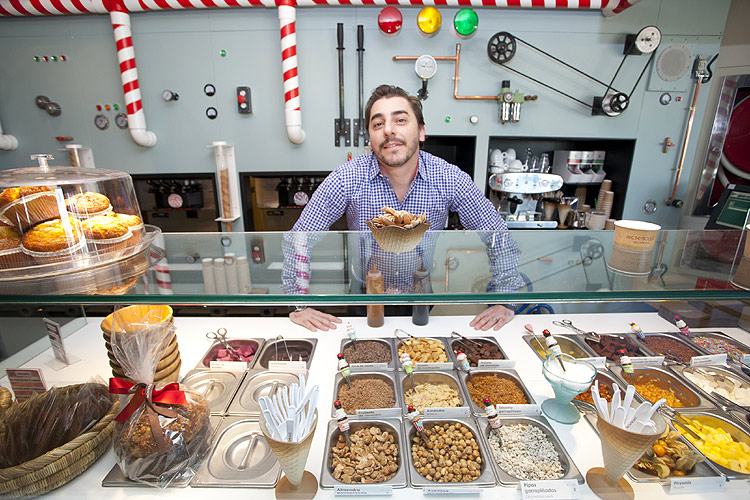
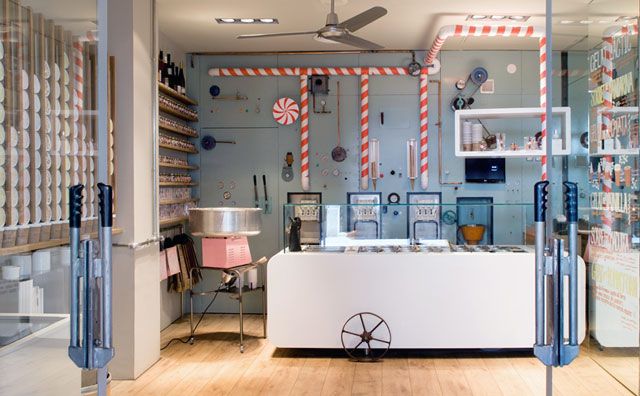
Just a small shop, on Carrer de Santa Clara in Girona, Rocambolesc radiates a vintage feel and as soon as you step inside you will instantly return to your childhood with “oooos” and “wows” as the colors, smells and sights hit, invade and delight your senses.

Rocambolesc ice-cream

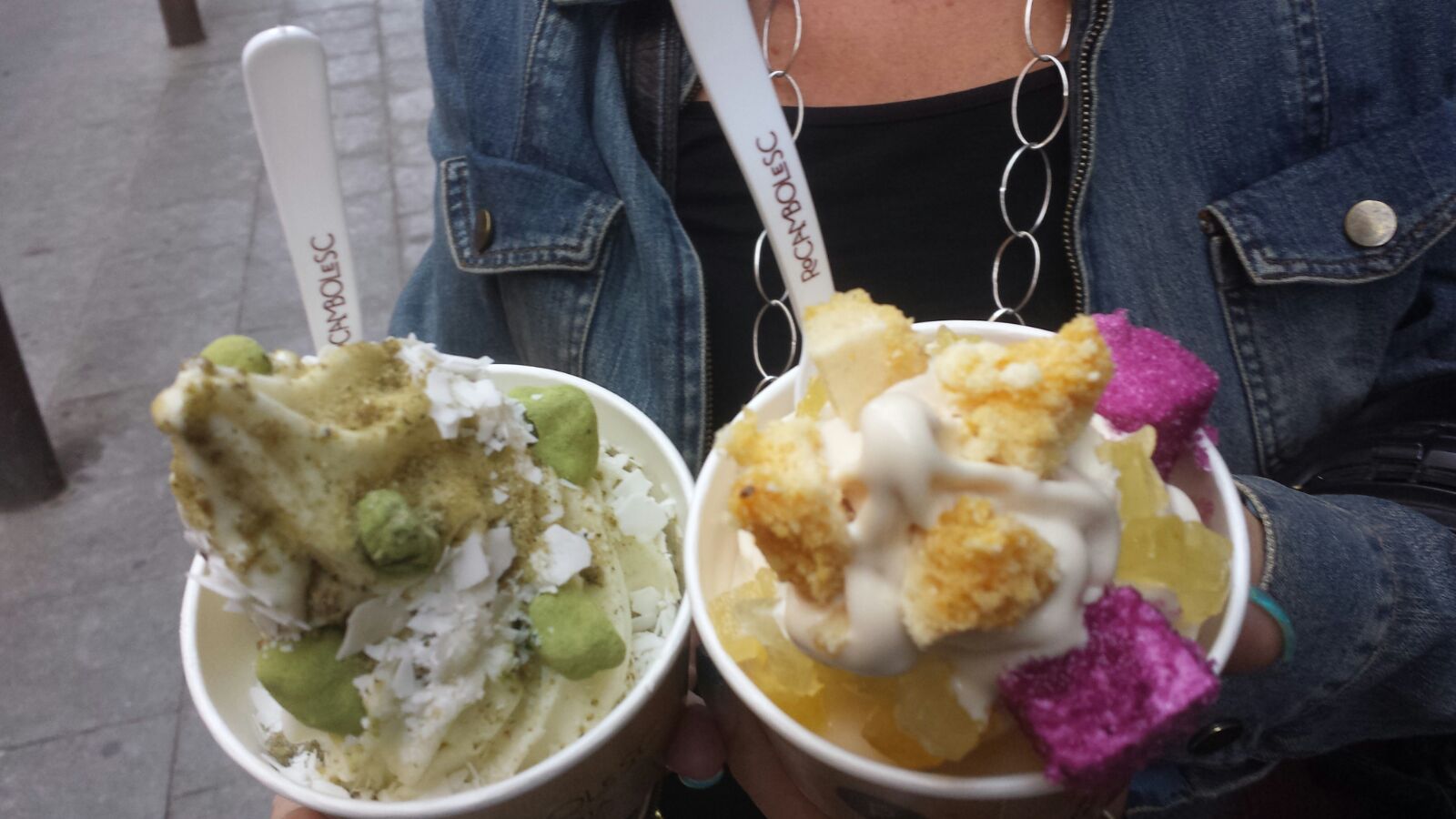
Rocambolesc – Enjoy El Celler de Can Roca delicacies at a fraction of the cost  –  just 3.90€ for a large tub (as per the photo) with 3 toppings!

There are six different flavors of ice-cream to choose from, in cones or tubs, including the classics of vanilla or chocolate and the more adventurous green sorbet or baked apple. Your server will recommend the 3 toppings ideal for your ice-cream flavor choice although you can choose your own 3 from over 30 options such as parma violet marshmallow, strawberries, caramelized apple, nut sprinkles, flaked sugar, crunchy caramel, honey rocks, coconut……

Jordi Roca and Rocambolesc

The youngest of the three Roca Brothers, Jordi Roca was proclaimed “The World’s Best Pastry Chef “in 2014 (the current holder of this title for 2015 is Albert Adrià). At El Celler de Can Roca Joan Roca heads the sublime kitchen; Josep Roca is the expert sommelier and Jordi Roca creates the imaginative desserts.


Where to find Rocambolesc:

Rocambolesc in Girona:
Carrer de Santa Clara 50, 17001 Girona
Open: Sun -Thurs 12:00 – 21:00, Fri and Sat 12:00 to 23:00

Rocambolesc in Platja d’Aro (Girona):
Avinguda de S’Agaró 59, 17249 Platja d’Aro
Closed in winter

Rocambolesc in Madrid:
Calle Serrano 52, El Corte Inglés- 7th Floor, 28001 Madrid
Open: Sun-Thurs 12:30 – 00:00, Fri and Sat 12:30 to 00:30


Experience the ice-cream joys of Rocambolesc on your Gourmand Breaks Private Food, Wine and Cultural Tour.  We can customise any of our Our Sample Spain Portugal Private Tour Itineraries to include a stay in Girona county and among other fascinating visits a private guided visit of the city of Girona.

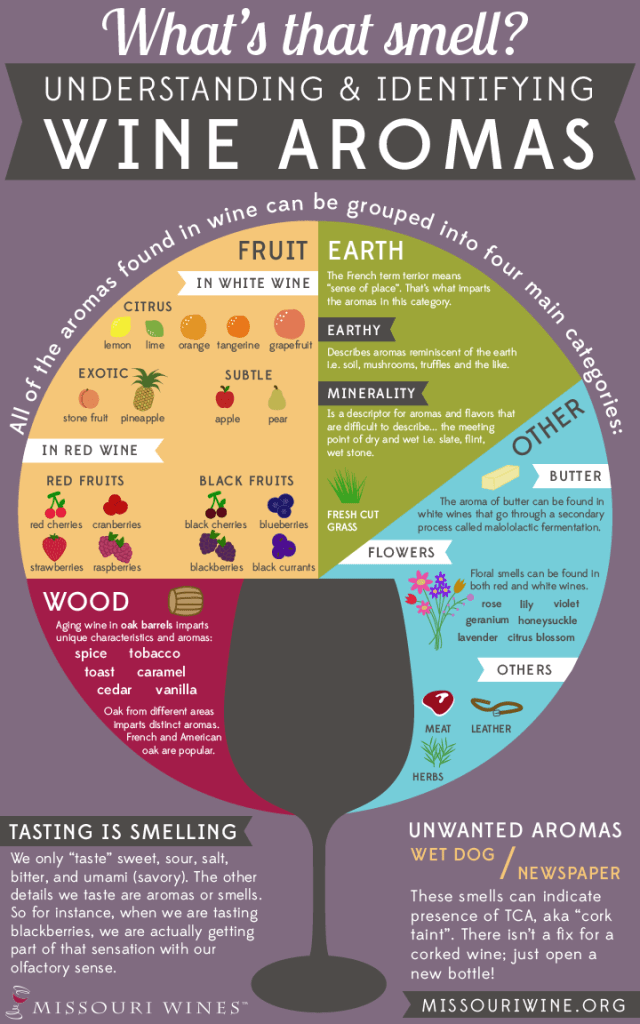
Cheers to Missouri Wines for this great explanation for Understanding and Identifying Wine Aromas:

Put your new found wine knowledge to the test on one of our Private Food, Wine and Cultural Tours in Spain and/or Portugal. Visit top class wineries in great Spanish and Portuguese Wine Regions such as La Rioja, Priorat, Penedes or Emporda in Spain and Douro Valley or Alentejo in Portugal.

It’s Michelin season once again and the Michelin Guide to Spain and Portugal 2016 is fast approaching !! We’ll keep you updated with the results of the NEW Michelin Starred Restaurants in Spain and Portugal Guide when announced on November 25th!

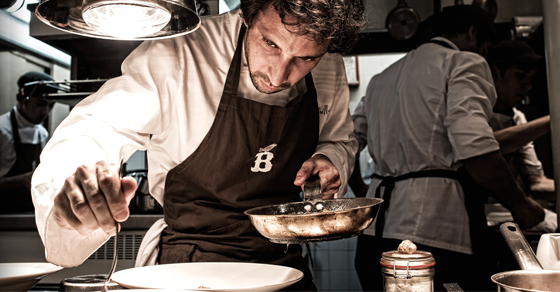
In the meantime, over the next few weeks we’ll be showcasing some of the Best Michelin starred Chefs in Spain and Portugal  with our own Pre-Michelin Guide Spain and Portugal 2016 SuperChef Series by Gourmand Breaks – An insight into the world of some of the current Michelin star chefs in Spain and Portugal!

This year we’re starting in Portugal where surprisingly there are no Michelin 3 star restaurants (yet!). First off, and in no particular order, a Portuguese chef who last year obtained his Second Michelin Star and is shooting for that 3rd Michelin star in 2016:

Belcanto - Lisboa

José Avillez –  is the first Portuguese chef to obtain the Michelin 2 Star Restaurant honor in Portugal. He currently has 5 restaurants in Lisbon – Belcanto, Cantinho do Avillez, Mini Bar, Café Lisboa and Pizzaria Lisboa,  1 restaurant in Oporto – Cantinho do Avillez, a take-away service called JA at Home and a wine range called JA Wines bearing his signature: JA Red, JA White and JA Rosé.

Belcanto, Lisbon  –  acclaimed the best restaurant in Portugal, is the flagship restaurant by the young talented chef José Avillez. It opened in 2011 in the Chiado district of Lisbon, Portugal. Within a year Belcanto was awarded its first Michelin star and in 2014 received its second for the 2015 Michelin Guide for Spain and Portugal. Belcanto is the first restaurant in Lisbon to obtain this Michelin 2 Star restaurant distinction. Original modern Portuguese cuisine, inspired by El Bulli, great service in an elegant setting with beautifully presented food and a fantastic selection of Portuguese wines – this is Belcanto.  To be enjoyed on one of our Private Food, Wine and Cultural Tours :)

Belcanto has also been elected one of the best 100 restaurants in the world by the prestigious Restaurant Magazine and currently stands at 91st place on  “The World’s 50 Best Restaurants List”.

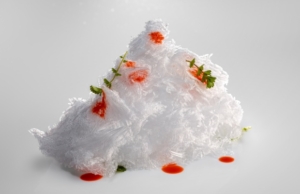
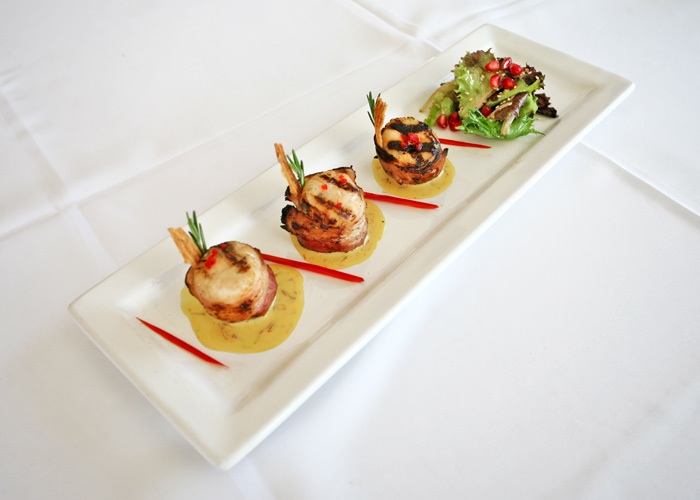
A dish by José Avillez at Belcanto © Vasco Célio

A dish by José Avillez at Belcanto © Vasco Célio

Experience Portugal’s growing gastronomy and fantastic wine regions on a Gourmand Breaks Private Food, Wine and Cultural Tour to include Portugal.  An ever-increasing destination choice with our guests Portugal can easily be combined with Spain  for a two-center vacation giving you the chance to indulge in the Best Michelin Starred Restaurants in Spain and Portugal.

It’s not “New” by any means, it’s been around for decades, but it’s the Nouvelle Cuisine of the Basque Country and it’s Nouvellicious. The revolution in Basque kitchens started in the 70’s and today the Forefathers of Basque Cuisine rub shoulders with the Modern chefs to promote this radically original cuisine with a splash of  style, a touch of expertise, a dash of creativity and sprinkling of pride.

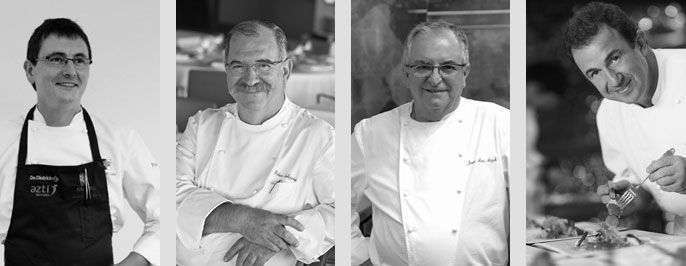
The New Basque Cuisine revolutionized the world when, in 1976, Juan Mari Arzak and Pedro Subijana, today regarded as the forefathers of the New Basque cuisine, set off to France in search of new techniques. Inspired by the work of Paul Bocuse, they went to Lyon to learn the secrets of Nouvelle Cuisine. The trip proved invaluable and on their return they set up a collaborative group that formed the foundations of the Basque Nouvelle Cuisine movement – a Basque cuisine revolution began.

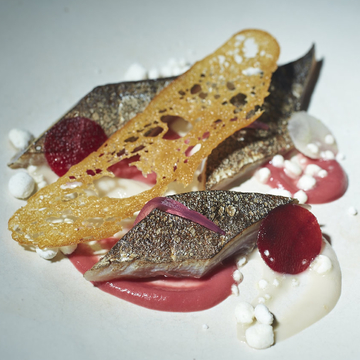
Arzak dish

The group revived and improved traditional recipes by using modern methods and innovative techniques. The goal was evolution although at the same time sticking to local tradition and the best quality regional products. Using traditional ingredients, chefs created new and innovative dishes offering lighter and less rustic versions of traditional dishes and flavors.

A new culinary movement was born – the Nueva Cocina Vasca – New Basque Cuisine, and in a few years the movement swept across Spain to become the default haute cuisine and by the 1990′s the New Basque Cuisine had spread worldwide.

Over the next 25 years, pioneering Spanish chefs began creating a new Spanish cuisine, experimenting with new techniques, and the term “molecular gastronomy” was born.

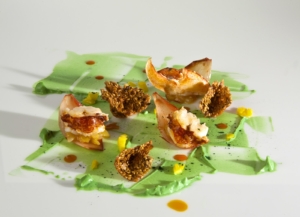
Martín Berasategui dish

Today the Basque Country and its’ chefs continue to enjoy international acclaim for their cooking in Michelin starred restaurants. More informally, many tapas bars, especially in San Sebastián, serve modern-style pintxos employing novel techniques and ingredients and in more recent years, young chefs, such as Martin Berasategui, have given new stimulus to Basque cuisine.

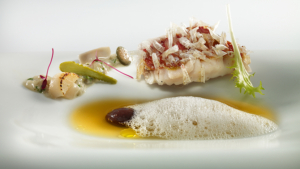
Mugaritz Dish

What better place to enjoy the New Basque Cuisine and the playful, innovative and twisted genre of molecular gastronomy than in the Basque Country. Join us on a Private Food and Wine Tour to include the Basque Country where you can enjoy the New Basque Cuisine in the heart of the action.


Nouvelle Cuisine, when mentioned, brings thoughts of small plates of food that many feel will see you leaving a restaurant with a lot less money and a lot more hunger than when you went in!!!  But, is this true?  What is sure, is that this French revolution has spread all over the World but, is Nouvelle Cuisine for everyone ? for the Gourmands? or just for the Gourmets? or is it a chance for a personal culinary experience that will excite the tastebuds and leave memories for a lifetime?

Nouvelle cuisine 

The term “nouvelle cuisine” has been used several times in the history of French cuisine, to mark a  break with the past, with tradition.  In the 1700’s several French writers emphasized this break with tradition, calling the new cooking style  “modern” or “new”.  In the 1880s and 1890s, the cooking of Georges Auguste Escoffier was sometimes described with the term.

Today, the French term “Nouvelle Cuisine” is  attributed to authors Henri Gault, Christian Millau, and André Gayot,who used nouvelle cuisine to describe the cooking of Paul Bocuse, Alain Chapel, Jean and Pierre Troisgros, Michel Guérard, Roger Vergé, and Raymond Oliver, many of whom were once students of Fernand Point. Paul Bocuse claimed that Gault first used the term to describe the food that he prepared, along with other top chefs, for the maiden flight of  Concorde in 1969.

The style that Gault and Millau wrote about was a reaction to the French cuisine classique placed into “orthodoxy” by Escoffier.  Calling for greater simplicity and elegance in creating dishes, nouvelle cuisine is not cuisine minceur (“thin cooking”), which was created by Michel Guérard as spa food.  It is thought that World War II was a significant contributor in the creation of the phenonenom of nouvelle cuisine, as  there was a short supply of animal protein during the German occupation hence the need to experiment.

Gault and Millau “discovered the formula” contained in ten characteristics of this new style of cooking. The ten characteristics of “Nouvelle Cuisine” were identified as:

  • A rejection of excessive complication in cooking.
  • Cooking times for most fish, seafood, game birds, veal, green vegetables and pâtés were greatly reduced in an attempt to preserve the natural flavors. Steaming was an important trend from this characteristic.
  • The cuisine was made with the freshest possible ingredients.
  • Large menus were abandoned in favor of shorter menus.
  • Strong marinades for meat and game ceased to be used.
  • They stopped using heavy sauces such as espagnole and béchamel in favor of seasoning their dishes with fresh herbs, high quality butter, lemon juice, and vinegar.
  • They used regional dishes for inspiration instead of cuisine classique dishes.
  • New techniques were embraced and modern equipment was often used; Bocuse even used microwave ovens.
  • The chefs paid close attention to the dietary needs of their guests through their dishes.
  • The chefs were extremely inventive and created new combinations and pairings

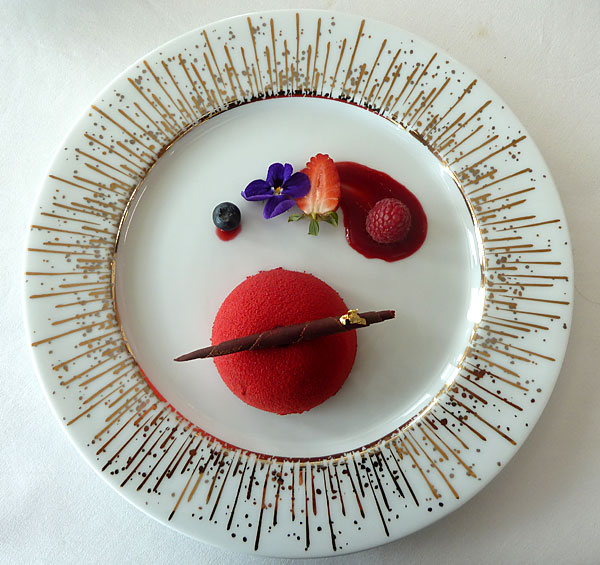
Nouelle cuisine dessert

Today Nouvelle Cuisine is Worldwide and plays a part in many kitchens. It is an art, a science, an explosion of sensation and a treat for the tastebuds that has foodies and the general public alike craving the escapism that it provides from everyday life. 

Join us on a Gourmet Private tour of Spain and/or Portugal  to escape into a Gourmet World of sublime enjoyment.

Evora is a small city surrounded by 14th century walls in the Portuguese wine region of Alentejo which is a vast, sun-drenched area covering around a third of Portugal. Only five per cent of the land is planted with vines though and between towns in Alentejo you can drive for miles passing cork and olive groves, vines, crops and grazing livestock.

 Evora, Portugal

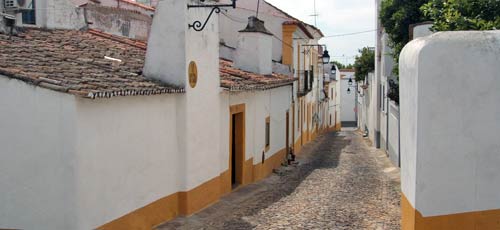
Évora is a walled city with a proud, rich and imposing past. The Romans were here, leaving their 1st century Temple behind, but so were the Moors who occupied the narrow streets with quaint small white washed houses.  Traces of different eras and civilisations have been left virtually untouched in a city where people still walk small cobbled, medieval streets. Large archways give way to picturesque squares where local artisan shops are found next to the modern high-street names and terraced cafés invite you to relax and watch the world go by. The large amount of rich monuments found in this city has led to its UNESCO classification as the ‘the finest example of a city of the golden age of Portugal after the destruction of Lisbon by the earthquake of 1755’.

 Evora streets

There are many great Alentejo wineries that you can visit in the surrounding  countryside so Evora makes a wonderful base for discovering the wine region although in Evora itself don’t miss:

Catedral da Sé – Built in 1186 in Romanesque style and later restored in the Gothic this is the greatest medieval cathedral in the country.  The facade is dominated by two asymmetrical towers flanking a massive doorway, which includes twelve figures of the apostles that are masterpieces of Portuguese Gothic sculpture. Don’t miss the shrine studded with 1,426 precious stones—and a piece of wood thought to be from the True Cross.

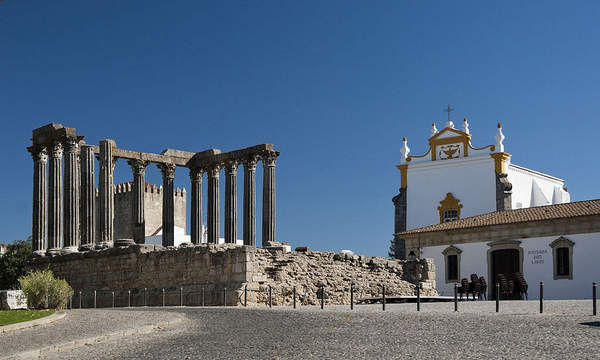
Templo Romano de Évora ou Templo de Diana (Roman Temple of Évora or Temple of Diana) –  This is one of the city’s most famous monuments and one of the main symbols of the Roman occupation of Portugal. There are 14 columns left of this temple which was originally built in the 1st Century A.D. as a place of worship to emperor Augustus. Legend has it that it was erected in honour of the Roman goddess of the hunt, Diana, and is more commonly referred to today as the Temple of Diana.

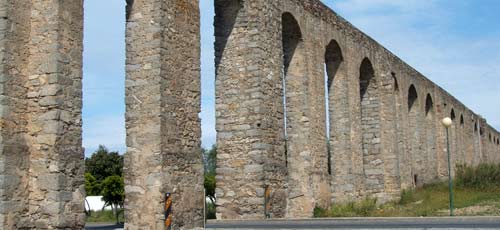
Aqueduto Água de Prata (Silver Water Aqueduct) – This is a masterpiece of engineering workdating back to the 16th century and one of Evora’s iconic monuments. Follow the aqueduct inside the walls of Évora and see how homes have been built inside the arches.  It is one of the largest aqueducts in Portugal and  used to bring water from the springs of Graça do Divor, 11 miles (18 kilometres) away, to the center of the town.

Capela dos Ossos (The Chapel of Bones) – Built in the 16th century by Franciscan monks to invite contemplation on the transitory nature of life, to transmit the message that life was just a passage before reaching heaven or hell. Approximately 5,000 skeletons, from 42 local cemeteries, are exposed on its walls and ceilings —ironically, all but the bones of the monks who created the chapel. This intriguing chapel belongs to the Igreja Real de São Francisco (San Francisco Royal Church) and if you are a little sensitive you may have to think twice before you enter the archway that states “We bones lying here await yours”. 

University of Évora – This 16th century university is the second oldest in Portugal and the azulejos that decorate the classroom entrances represent each of the subjects taught.  Opened in 1559 and run by the Jesuits before they were evicted by the Marquês de Pombal in 1759, its elaborate classrooms look onto a serene courtyard with a central fountain. Feel free to walk through its marble cloisters, look in on classrooms with teaching pulpits and 18th-century blue-and-white azulejos (tiles, painted here to reflect the academic subjects) and don’t miss the chapel’s tapestry and the stunning painted ceiling of the library. The students are unfazed by visitors.

Praça do Giraldo –  The center piece of the main square of Evora is a marble fountain,  the fonte Henriquina, that dates from the 1570’s.  This water fountain  marked the original source of the aqueduct of silver water and has eight streams, each representing the eight streets which lead from the Praca do Giraldo.  The square today is a calm and pleasant setting to spend an hour or so doing some people watching but was once the scene for some of the region’s most violent historical events such as the murderous 16th century Spanish Inquisitions for which it was the focal point.

 Evora aqueduct

Discover some of our customized food and wine tours to the most beautiful regions of Spain, Portugal and S.W France Food, Wine & Cultural Tours of Spain, Portugal & S.W France

Our travel agency creates private and high-end wine, culinary and cultural tours in Europe. We understand that everyone’s idea of the ´perfect´ package is unique which is why we work with you to customize your unforgettable experience – with an emphasis on the personal touch. Contact us to receive a quote for your private customized food and wine tour

Gastronomy in Andalusia is very location-specific – everyone knows that the best strawberries and jamon come from Huelva; sardines from Malaga; tuna from Barbate; mangoes from Granada; cucumbers and tomatoes from Almeria…..

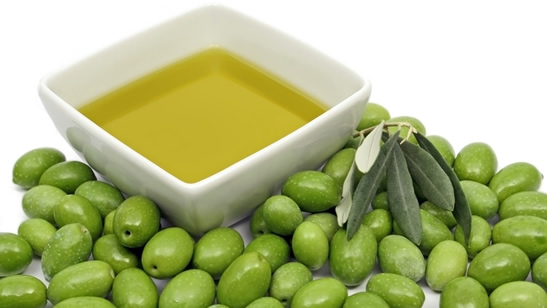
Andalusia is the largest agricultural producer in Spain.  It leads the national production of table olives and the world’s largest producer of olive oil.  Jaen will say that they make the best olive oil, although in Cordoba, Granada and Seville they will dispute this.

Olives

Similar to Spanish wine, Spanish Olive Oils have strict standards and seals provided by the different “Denominaciones de Origen”, Designation of Origin, to ensure their unique taste and high quality.  The richness and variety of Andalusian oils is reflected in the recognition of 12 Protected Designation of Origin “PDO” areas, each with its own characteristics.The ratio by province is as follows: Cádiz,  (Sierra de Cádiz PDO); Córdoba (Baena PDO; Montoro-Adamuz PDO; Priego de Córdoba PDO and Aceite de Lucena PDO); Granada (Poniente de Granada PDO and Montes de Granada PDO); Jaén (Sierra de Cazorla PDO; Sierra Mágina PDO and Sierra de Segura PDO);  Málaga (Antequera PDO); and Seville (Estepa PDO).

Greenhouse cultivation predominates in Almería, producing noteworthy amounts of vegetables. Huelva and Granada are leaders in fruit production, cultivating strawberries and tropical fruit respectively.

Pigs are bred primarily in the mountains of Cádiz, Córdoba, Huelva, Málaga and Seville, where large herds of Ibérico pigs are raised.

Fishing is a chief industry in Cádiz, Huelva and Málaga, where fishermen specialise in catching tuna, prawns and sardines. The Andalusian fishing fleet consists of over 1,575 vessels and the captures reach 41,528 tons per year (2013).

Wine production is centered in the regions around Jerez (the area with the oldest and longest wine exporting tradition in Spain), Montilla-Moriles, Málaga and Huelva.

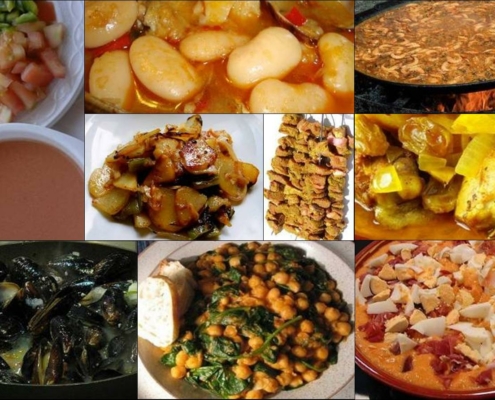
Andalucian cuisine

Andalusian gastronomy has deep roots within the Arabic cuisine of Al-Andalus (711-1492). Its refinement, unknown in Europe, transformed a wide range of customs. It was the andalusíes themselves who invented the dining room and the current order in which we eat dishes during a meal.

Gazpacho (a cold soup made of tomato, bread, onions, peppers, cucumbers, garlic, oil, vinegar and salt) is the typical Andalusian dish par excellence.

Tapas (small cold or hot dishes served in bars as aperitifs) attain their maximum expression in Andalusia (Cádiz, Málaga, Jerez…), where they are always served along with a glass of wine or beer.

Tapas hopping is part of Andalusian life and  Seville, for example, boasts around 4,000 tapas bars – roughly 1 for every 200 locals so you know they know what they’re talking about!  Plate after plate of hot and cold food comes freshly out of the kitchen to appear on the bar to tempt your palate. Try cold roasted pepper salad or anchovies in vinegar, a hot dish of meatballs in sauce or a slice of Potato Omelet ….. the choice is yours.  Of course, as is customary, accompany your mouth watering bites with a glass of dry Spanish Sherry, wine or draft beer.

Traditional Andalusian desserts are characterized by clear Arabic influence, like torta real de Motril, tocinos de cielo de Guadix, torrijas de Semana Santa or piononos de Santa Fe, exquisite sweet fillings cream. Other desserts  collect a long tradition of Andalusian cuisine convents, which is reflected in the famous St. Ursula yolks.

Here are just some of the typical Andalusian dishes you may like to try while you’re staying in Andalusia:

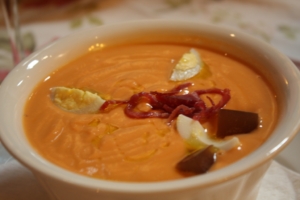
Salmorejo – a thicker version of Gazpacho, from Cordoba, normally served with chopped boiled egg and jamon.

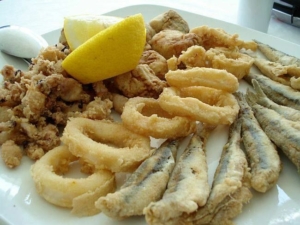
Pescaito Frito - a mix of fried fish, normally including calamares (squid), adobo (marinated dogfish), merluza (hake) and puntillitas (baby octopus).

Pescaito Frito – a mix of fried fish, normally including calamares (squid), adobo (marinated dogfish), merluza (hake) and puntillitas (baby octopus).

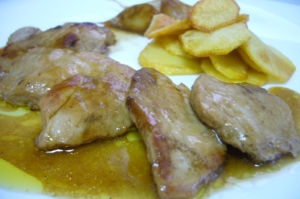
Solomillo al Whisky - Pork fillets cooked in whisky.

Solomillo al Whisky – Pork fillets cooked in whisky.

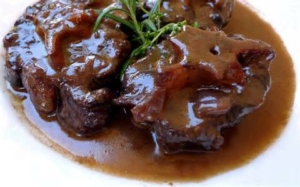
Rabo de toro - bull's tail stew - traditionally eaten after bullfights, using that day's toros.

Rabo de toro – bull’s tail stew – traditionally eaten after bullfights, using that day’s toros.

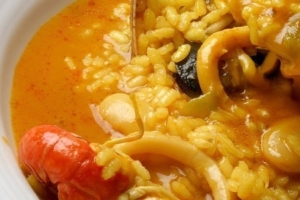
Arroz marinero - a succelent seafood rice, cooked in a cazuela (pot) usually including almejas (clams), mejillones (mussels) and shrimp (gambas).

Arroz marinero – a succelent seafood rice, cooked in a cazuela (pot) usually including almejas (clams), mejillones (mussels) and shrimp (gambas).


Join us on a personalized private tour of Spain, like the Majestic Madrid and Authentic Andalusia Tour, to experience the sights and delights of Andalusia in Southern Spain with the orange scented patios of Seville, Romantic Ronda, Grand Granada and Curios Cordoba!

Portugal is divided into 14 Regional Wine areas : Vinho Verde, Trás-os-Montes, Porto and Douro, Távora-Varosa, Bairrada, Dão, Beira Interior, Lisboa, Tejo, Península de Setúbal, Alentejo, Algarve, Açores and Madeira.

Portuguese wine is then categorized using the ‘DOC’ (Denominação de Origem Controlada) system meaning Controlled Denomination of Origin. Portugal has 31 DOCs/DOPs.  At the moment, both the traditional terminology of DOC and the new pan-European “DOP” are used. DOP (Denominação de Origem Protegida) means Protected Denomination of Origin. The “DOC/DOP” system is similar to the Denominación de Origen “DO” system of Spain, the Appellation d’origine contrôlée “AOC” system of France and the Denominazione di origine controllata “DOC” of Italy.

In the Douro there are separate DOCs  for unfortified wine and for Port, although geographically they both lie within the same  boundaries.
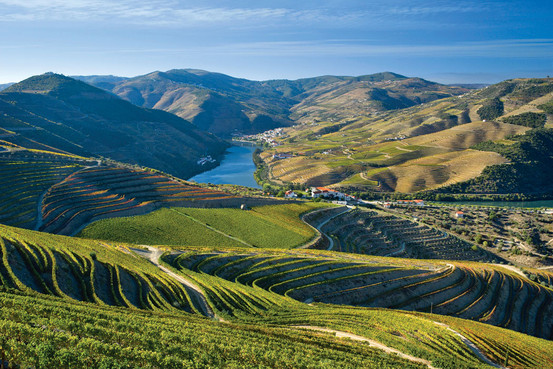
Douro Valley

DOURO VALLEY

The Douro Valley, Portugal, is considered one the most spectacular wine regions of the world with its terraced vineyards on sloping hills that meet the meandering River Douro below as it cuts through the mountains. The characteristic terraces of vines in the Douro Valley were introduced by the Romans in the third century A.D and the Douro “vinhateiro” wine-growing area of the Douro Valley is now a designated a UNESCO World Heritage Site.

The soil in which the Douro Valley vines are planted is made up of schist, a slate-like metamorphic rock.  Rich in nutrients, it also has useful water retention properties.

Long famous as the source of Port Wine, the authentic port wine is made at ‘quintas’ (estates) along a narrow river gorge that winds 100 miles through the mountain ranges and was once shipped downriver to the city of Porto in sailboats called ‘barcos rabelos’. But, the Douro Valley not only produces fortified wine.  Around the same amount of  unfortified wine is produced and is renowned for its fine and rich red and white wine.

The Douro wine region of Portugal is divided into three sub-regions: Baixo Corgo, Cima Corgo and Douro Superior from west to east respectively. The further east, the drier the climate becomes and the deeper the wines. The Cima Corgo, which includes the towns of Pinhão, São João da Pesqueira and Tua, is the heart of fine port production and where also many of today’s fine unfortified wines are produced.

  • The Baixo Corgo lies at the western end, closest to the Marão mountains, where the rainfall and vineyard yields are highest. This area mainly produces the lighter more early maturing styles of Port intended to be drunk relatively young.
  • The Cima Corgo area is the location of many of the Douro’s finest vineyards and produces more concentrated and long lasting wines.
  • The Douro Superior is the easternmost area and is the driest of all making it the source of many of the finest Vintage Ports.
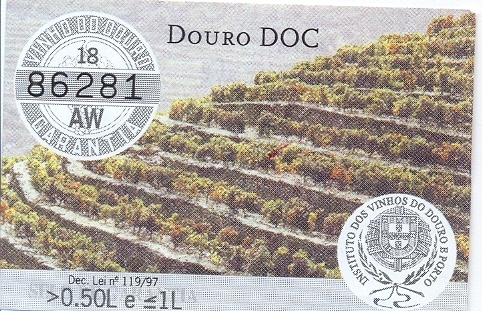
Douro DOC

Main white Douro Valley grapes:

  • Viosinho, Malvasia Fina, Gouveio, Rabigato, Côdega, Donzelinho Branco, Esgana Cão and Folgazão


Main red Douro Valley grapes:    

  • Touriga Nacional, Tinta Roriz (Aragonez), Touriga Franca, Tinta Barroca, Tinto Cão, Sousão, Bastardo, Mourisco Tinto, Castelão, Rufete, Tinta Amarela (Trincadeira) and Tinta Francisca


Just some of the World class Quintas that you could be visiting in the Douro Valley:

Quinta do Crasto –  Sitting in a privileged location in the Douro Demarcated Region, this Quinta is famous for its sophisticated wines as well as for the dramatic views. This single vineyard property dates as far back as the early seventeenth century, long before the Douro became the world’s first demarcated wine region in 1756

Quinta do Seixo – Sandeman’s flagship, and a most exclusive port winery, of the most important Port wine producer. This Winery is beautifully maintained and picturesquely located just down the river from Pinhao, with gorgeous views of Pinhao.

Quinta do Panascal  – This majestic quinta, whose reputation goes back to the 18th century, is located on the banks of the river Távora. It is the most important estate of the prestigious Port Wine Company “Fonseca Guimaraens”.

Quinta de la Rosa – Quinta de la Rosa is unusual in the way that they do everything in the Douro. Most port houses make their port in the Douro but store and bottle it in Vila Nova da Gaia, in Porto. Here, you will be able to see both wine and port making processes side by side.
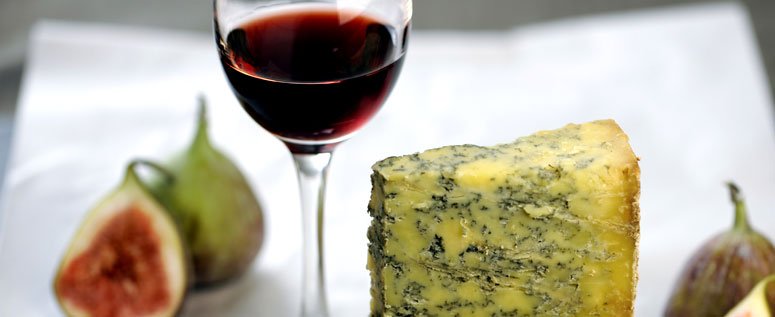
 

port

PORT WINE

Port Wine is a wine that was developed in Portugal by the British.  It is a by product of their battles with France through the 17th and 18th centuries. The English finally decided to boycott French wine in the late 17th century  and began sourcing their red wine from Portugal. They started to add a drop of Brandy to the still wine so that it would arrive in England after the long trip on a rocky boat without spoiling. This addition of the brandy not only gave the wine the strength to survive the journey but it also made the wine considerably sweeter when it was added early enough to stop fermentation.

Today, Port wine ferments for only 2 to 3 days, has brandy added, and then is aged in wooden barrels. How long it ages determines the taste and how sweet the wine is.

The base  for Port is made and fortified in wineries in the Douro Valley, then transported to the Port lodges of Vila Nova de Gaia, opposite Porto, at the mouth of the river, for ageing. Here, the ageing and blending of most of the world’s supply of Port wine takes place beneath a sea of red roofs emblazoned with some of the most famous names in wine-making. Rabelo boats were traditionally used to carry the wine down the river from Douro to the lodges in Oporto.

There are generally five different types of port wine – white, ruby, tawny, late bottle vintage (LBV), and vintage. White is aged early and is young and robust.  Ruby is aged for 3 years with a strong grape and pepper taste.  Tawny is aged in smaller wooden barrels and varies from 10 to 40 years (the label will specify how many 10, 20, 30, 40) with a lighter color and a more mellow taste. Late Bottle Vintage is aged 4 to 6 years while vintage is from a single harvest and is bottled after only two years in barrel, keeping it rich and red, then 10 to 30 years in the bottle. All port wines are medium sweet but they do range from a drier, less sweet to very sweet.

Although around thirty grape varieties can be used to make Port Wine, the five red grape types now generally considered to produce the finest port wine are: Tinta Roriz, Touriga Franca, Touriga Nacional, Tinta Barroca and Tinto Cão.

Just some of the fantastic Port Wine Lodges  that you could be visiting in the Porto:

Taylor’s Port Wine Lodge –  One of the oldest of the founding Port houses was established over three centuries ago in 1692. For many, Taylor’s is the archetypal Port house and its wines the quintessential Ports.  It is dedicated entirely to the production of Port wine and in particular to its finest styles. The history of the firm is in many ways the history of the Port trade itself.

Graham’s Port Wine Lodge  – For almost two hundred years W & J Graham’s has been an independent family business renowned for producing some of the finest Port wines. Wine Spectator Magazine voted Dow’s 2011 as the best port Wine in 2014. Dow’s Lodge in Porto is not open for visitors, but Graham’s is their sister company and you can buy the awarded Port here.

Sandeman Port Wine Lodge –  Founded in 1790 the Sandeman Lodge is housed in a former 16th century convent with a small museum. The Sandeman Porto Cellars are a landmark spot and the building boasts one of the best views of Porto.
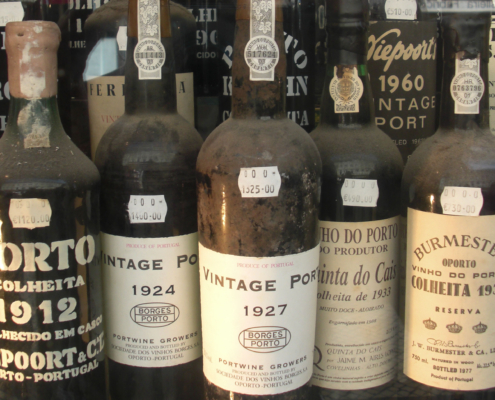
 Port Wine, Portugal

Join us on a Private Tour of Portugal (or a combined tour with Spain) like our  Luxury Tour of Portugal – Wine and Culture  to experience the beautiful Wine Regions of Portugal in Alentejo and the Douro Valley, among others, to enjoy winery visits and tastings as well as a relaxing picnic in a vineyard and a cruise along the Douro River.



Wine from the Spanish Priorat region is not only the most highly regarded in Catalonia—it is some of the best in the world. That is why it has been granted its elite label of D.O.Q., or Qualified Destination of Origin.

Priorat Stamp

Quality Spanish wines are classified using a system based on the “Denominación de Origen” or “DO”, designated origin, which determines where each wine has been produced. Spanish wine laws created the “DO” system in 1932 and it was later revised in 1970. In addition to the “DO” system in Spain there is also the Denominación de Origen Calificada “DOCa” or “DOQ” in Catalan, a status for DOs that have a consistent track record for quality. There are currently only two DOCa/DOQ regions in Spain: Rioja and Priorat.

Perhaps what gives the wine in the Priorat Wine Region of Spain its famous and unique personality are all the extremes in both its climate and beautiful geography. In addition to sharp temperature fluctuations between night and day, this slate-soiled land is full of majestic cliffs and steep hillsides where terraces sometimes have to be built to grow parts of vineyards.

The most planted grape varieties in the Priorat Wine Region of Spain are red ones, with Carinyena (Carignan) and Garnatxa (Grenache) being the most important and recommended native varieties.

The permitted grape varieties of the DOQ Priorat Wine Region of Spain are the following:

  • Red Priorat Grape Varieties: Grenache, Carignan, Hairy Grenache, Tempranillo, Piquepoul, Cabernet Sauvignon, Cabernet Franc, Pinot Noir, Merlot and Syrah.
  • White Priorat Grape Varieties: Garnacha Blanca, Macabeo, Pedro Ximinez, Chenin Blanc, Muscat of Alexandria, Muscat Blanc à Petits Grains, Xarello, Piquepoul


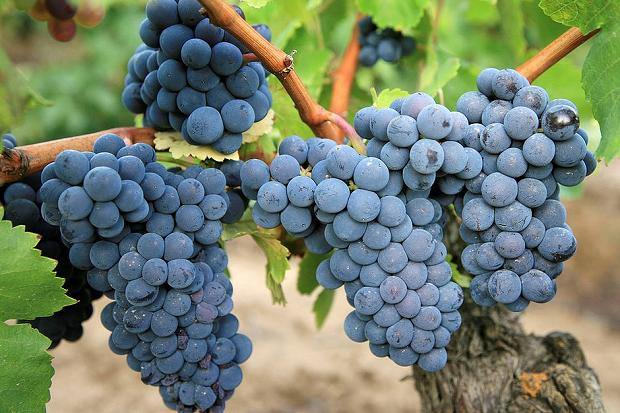
Carignan grapes

Part of the Priorat region overlaps with another highly esteemed region, the Montsant DO, where the Capçanes cellers produce kosher wines in accordance with Jewish tradition in addition to other high quality wines.

Montsant Wine Region of Spain Grape Varieties:

  • Red Montsant Grape Varieties: Ull de Llebre (Tempranillo), Cabernet Sauvignon, Samsó, Mazuela, Garnacha Tinta, Garnacha Peluda, Merlot, Monastrell, Picapoll  and Syrah
  • White Montsant Grape Varieties: Garnacha Blanca, Macabeo, Chardonnay, Muscat, Parellada, Pansal

Among the most interesting spots in the region is where the Carthusian Priory (or Priorat) of Scala Dei founded its first monastery on the Iberian Peninsula in the 12th century. This site, situated at the foot of the Montsant mountain range, is where the region’s winemaking tradition originated. The society thrived there until 1835 when the church shut the monastery operations down, but the ruins can still be toured through alongside vineyards that are stronger than ever before.

In 1900 an outbreak of phylloxera devastated the region’s vineyards and, as the textile industry was taking off in Catalonia, entire work forces fled to the city to work.  New vines were therefore not planted again, except on a small scale, which fortunately, is what remains today.

Some twenty odd years ago, the Priorat region was on the verge of extinction, with grape prices so low that this was one of Spain’s most impoverished regions. It took a few visionaries to realise Priorat’s potential and most people agree that René Barbier initiated the Priorat revival. In the 1980s he established a co-operative that put its first wine on the market in 1991 and the rest, as they say, is history.

While refining your palate, you may also want to note this region’s production of world-class olive oils, which are also classified into DOs. One of the best olive oils comes from the Priorat town of Siurana, which is set upon a mountain rounded with austere cliffs. As the last Moorish stronghold in Catalonia, this town also comes with its own set of intriguing historical legends.

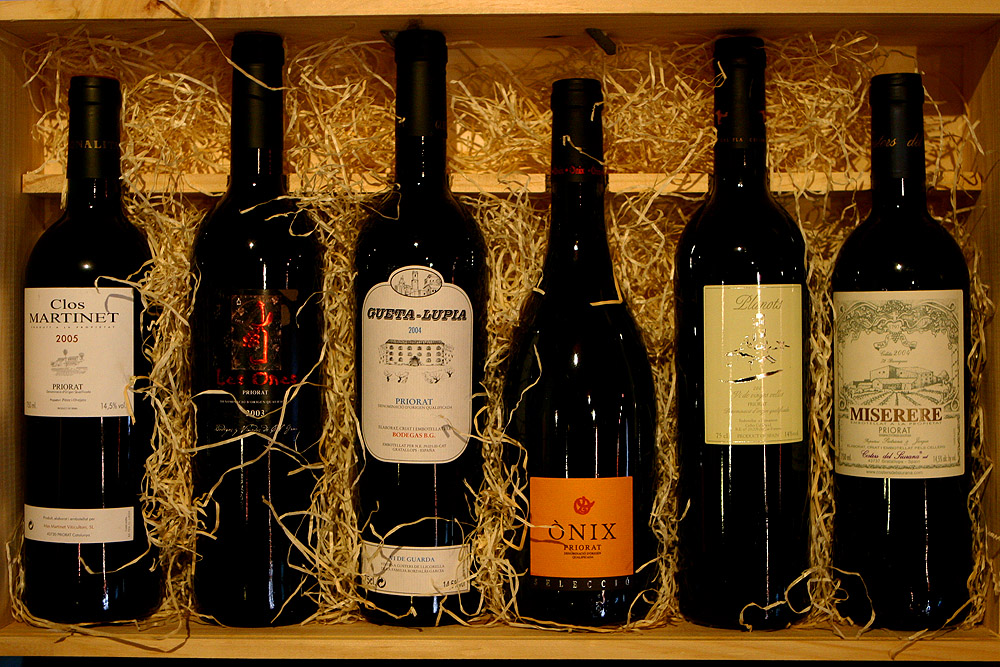
Priorat wines


If you love Wine you can’t miss the Wine Regions of Spain!

Join us on a Private Wine Tour of Spain like our Wine Lovers Tour of Spain and Portugal to explore the Ribera del Duero, La Rioja, Priorat and Penedes Wine Regions of Spain and enjoy expert  guided visits to some fantastic wineries and taste some great Spanish wines.

Some of the wineries you might visit in the Priorat DOQ Wine Region of Spain are:
  • Clos Mogador
  • Costers del Siurana
  • Gratavinum Spanish Winery
  • Mas Blanc Pinord
  • Mas Doix Spanish Winery


More of our Gourmand Breaks DO the Wine Regions of Spain:

Our Gourmand Breaks DO the Vineyards series is covering some of the great Wine Regions of Spain.

Quality Spanish wines are classified using a system based on the “Denominación de Origen” or “DO”, designated origin, which determines where each wine has been produced. Spanish wine laws created the “DO” system in 1932 and it was later revised in 1970. In addition to the “DO” system in Spain there is also the Denominación de Origen Calificada “DOCa” or “DOQ” in Catalan, a status for DOs that have a consistent track record for quality. There are currently only two DOCa/DOQ regions in Spain: Rioja and Priorat.

Rioja stampLocated partly within the Basque country, Rioja  DOCa  Wine Region of Spain is perhaps best known for red wines and the Tempranillo grape. The Rioja Spanish Wine DO Ca region’s red wines cover many different styles from young wines through to more sophisticated wines which are capable of many years of cellaring – proving the versatility of Tempranillo. Some producers also offer white wines, including some fine barrel-fermented and oak-aged styles and rosés.  The best known of the Spanish wine DO regions, Rioja Spanish Wine DOCa carefully preserves its wine styles but interestingly there are some modern trends which are starting to show through.
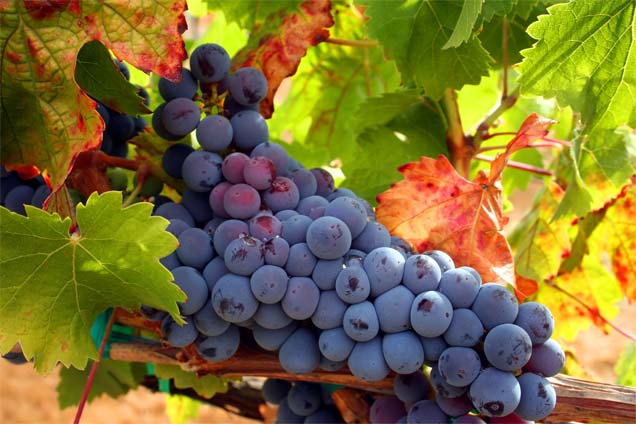
Rioja Spanish DOCa wines are mainly aged according to strict specifications and not released until they are considered to be ready to be drunk, which is unique to this part of the wine world. Crianza, Reserva and Gran Reserva, the various ageing categories are indicated on the back label of each bottle. With an indication often given of other grapes which may have been utilised in the blend.   For example, Tempranillo is supported by Graciano, Garnacha and Mazuelo depending on the producer and even Cabernet Sauvignon occasionally. More especially in barrel aged wines, this gives Rioja Spanish Wine DOCa region wines their very distinctive style.  Not all Rioja Spanish Wine DOCa region wines follow the traditional age classifications and indeed some modern types of wines have more focus on a specific vineyard, reflecting the strong interest among producers to offer wines with distinctive local character.

tempranillo grape

The first Spanish Rioja bodegas date from 1870-1890 but the region expanded dramatically and established its reputation at home and abroad during the 20th century. The early years of this century has a new wave of modern architecture appearing on the landscape and also for new cellars many metres under ground.  Wineries/Cellars designed by famous architects such as Santiago Calatrava and Frank Gehry now stand next to those with an historic background, making Rioja Spanish Wine DOCa region an incredible place to visit for wine, food, spectacular scenery and architecture.

The main towns on Rioja’s wine routes include Haro, Labastida, Cenicero and Elciego, which all have a concentration of wineries with tours and tastings available.

Rioja Spanish Wine DOCa Region Principal Red Grape Varieties: Tempranillo (approximately 80% of all varieties planted), Graciano, Garnacha, Mazuelo. Other authorised red varieties: Maturana Tinta

Rioja Spanish Wine DOCa Region Principal White Grape Varieties: Viura, Malvasía, Garnacha Blanca. Other authorised white varieties: Maturana Blanca, Tempranillo Blanco, Turruntés, Chardonnay, Sauvignon Blanc and Verdejo

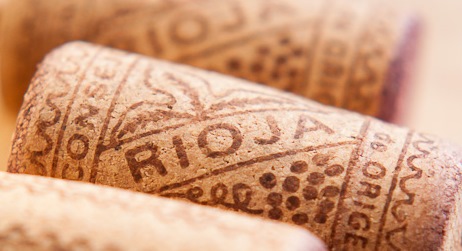
rioja cork

If you love Wine you can’t miss the Wine Regions of Spain!

Join us on a Private Wine Tour of Spain like our Wine Lovers Tour of Spain of Portugal to explore the Ribera del Duero, La Rioja, Priorat and Penedes Wine Regions of Spain and enjoy expert  guided visits to some fantastic wineries and taste some great Spanish wines.

Just some of the wineries you might visit in the La Rioja DOCa Wine Region of Spain are:
  • Marques de Murrieta 
  • Miguel Merino
  • Ysios
  • Roda
  • Torre de Oña


More from our Gourmand Breaks DO the Wine Regions of Spain: